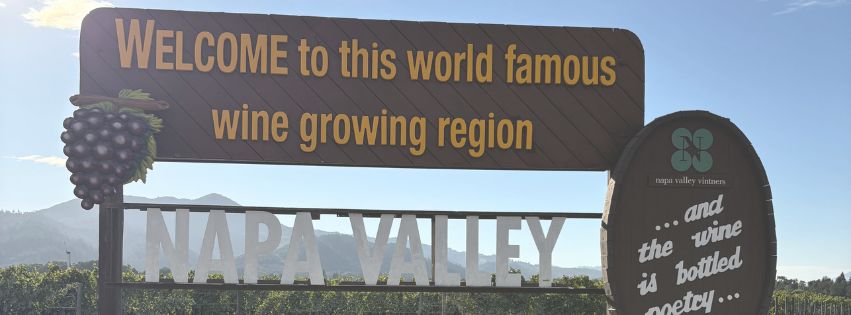
There are experiences that begin with a simple yet powerful desire: the urge to learn by looking beyond one’s own horizon. This is the starting point of Alberto Sabaini’s journey, who, immediately after graduating in Viticulture and Enology, chose to cross the ocean and spend six months in the beating heart of the global wine world: Napa Valley.
Not an escape, but a search. Not a departure, but a return enriched.
For Alberto, leaving meant carrying the roots of his own winery with him, while at the same time putting them to the test in a completely different context. The goal was clear: to observe, learn, and grow. To experience firsthand a different way of making wine, without ever losing touch with his own identity.
A Different Idea of a Winery
The first impression upon entering the winery is that of stepping into a perfectly orchestrated system. Every person has a precise role, every action is part of a larger mechanism. It is an almost “industrial” organization, but not a cold one: on the contrary, it is functional, efficient, designed to ensure quality at every stage.
During the harvest, this approach reveals its full strength. Grapes are picked at night, when temperatures are lower and the fruit retains its freshness. By morning, everything is already set to begin the winemaking process.
A different rhythm, yet deeply consistent with the ultimate goal: preserving the integrity of the fruit.
Technique, Precision, and Respect
In Napa Valley, Alberto encountered a fascinating balance between technology and attention to detail. What stands out is the almost meticulous focus on hygiene, the constant maintenance of equipment, and the strategic use of tools such as nitrogen and dry ice to protect the wine from oxidation from the very first stages.
But what truly leaves a lasting impression is the mindset: every choice is intentional, every intervention has a precise purpose. It is not just about making wine, but about crafting it step by step, with method and vision.
The Vineyard: A Dialogue with the Climate
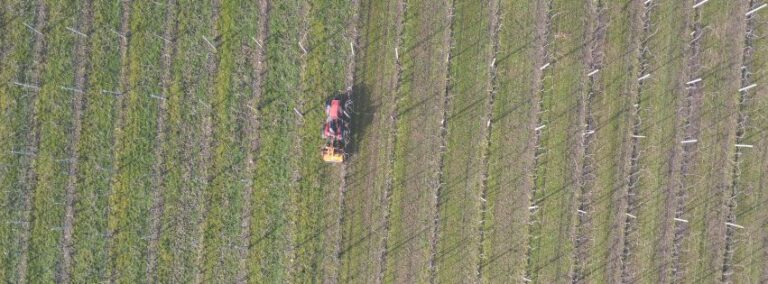
Among the vines, everything changes as well. California’s warmer, drier climate profoundly influences agronomic decisions. Irrigation becomes a precise tool, while practices such as leaf removal and canopy management are carefully calibrated to guide grape ripening.
It is an agriculture that observes, interprets, and intervenes only when necessary.
The Value of Details (and People)
Among the most intense moments Alberto experienced, one in particular captures the deeper meaning of his journey: the manual selection of grapes affected by noble rot for the production of a sweet wine. A slow, meticulous task, made up of repeated gestures and absolute focus.
It is there that one truly understands how quality is born from patience.
And then there are the people. Working side by side in the winery, the daily exchange of ideas, the sharing of a common passion. Even moments outside of work—like a Thanksgiving spent with a host family—transform a professional experience into something human, authentic, and unforgettable.
Wine as a Story
If there is one lesson Alberto brings back from Napa Valley, it is that wine is not just a product: it is an experience.
Every bottle contains a story that must be told. The winery visit, the hospitality, the language, the details—everything contributes to creating an emotional connection with those who taste it.
It is not enough to talk about technique. One must convey identity.
Growing Beyond Technique
This experience also profoundly changed Alberto’s perception of the winemaker’s role. No longer just a technical figure, but also a coordinator, an organizer, a storyteller. Someone capable of combining scientific expertise, workflow management, and the ability to communicate the value of wine.
It is a kind of growth that goes beyond knowledge: it concerns the way one thinks, observes, and makes decisions.
Returning to Move Forward
At the end of the journey, what Alberto brings home is not just a set of skills, but a new awareness. Many of the innovations he observed do not require revolutions, but rather attention, precision, and organization.
Small changes that can make a big difference.
And perhaps this is the truest meaning of an experience abroad: leaving to learn something new, and returning with a different perspective on what one has always done.
Because wine, in the end, is exactly this: a continuous dialogue between tradition and the future. Between who we are and who we can become.